|
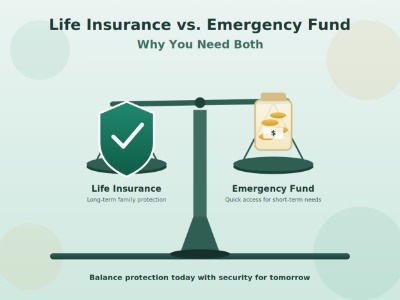
Life insurance has changed a lot over the years. Some plans today can help you access money during tough times. But that does not mean a life policy can replace your emergency fund.
An emergency fund provides quick access to cash when life throws unexpected challenges your way. Life insurance Dubai provides long-term financial protection for the people who depend on you.
The strongest financial plan isn't about choosing one or the other. It's about having both.
Build an emergency fund for short-term surprises. Maintain adequate life coverage for long-term security. Together, they create the kind of financial resilience every family needs.
The Shiny Pitch: What is “Cash-Value” Insurance?
When people talk about life insurance as an emergency fund, they are not talking about basic term life insurance (which only pays out if the worst happens). They are talking about “permanent” policies that do two things at once:
- The Shield:It provides a life insurance payout for your family.
- The Piggy Bank:A portion of your monthly premium goes into an investment pot that grows over time, known as "cash value."
The trend suggests that if you face a sudden financial crisis, like a sudden job gap or an unexpected medical bill, you don’t need a savings account. You can simply call your insurance company and borrow money against your policy’s piggy bank, or make a partial withdrawal.
It sounds like the ultimate financial Swiss Army knife. But in the real world, trying to use your parachute as a first-aid kit can get incredibly complicated.
Why is a Life Insurance Policy a Terrible Instant Emergency Fund?
Imagine your car breaks down on Sheikh Zayed Road in the middle of a June heatwave, or your home AC unit suddenly quits. You need cash right now.
If you try to rely on your insurance policy as your primary emergency fund, you will hit three massive walls:
1. The Clock is Ticking (Slow Liquidity)
An emergency fund needs to be lightning-fast. With a high-yield UAE savings account, you swipe your debit card or transfer cash instantly. With an insurance policy, pulling out cash or getting a policy loan involves paperwork, approvals, and waiting days, sometimes weeks, for the funds to clear.
2. The Golden Handcuffs (Lock-In Periods)
Most cash-value plans or ULIPs have strict lock-in periods (often 3 to 5 years). If you have an emergency in Year 2, your money is completely trapped. If you force the policy open early (surrendering it), the insurance company will charge you massive penalty fees, meaning you might get back far less than you put in.
3. You Arrive Empty-Handed
In the first few years of a permanent life policy, almost all your premium money goes toward administrative fees and the cost of the insurance itself. Your "piggy bank" side starts at zero and grows very slowly. If an emergency hits early on, there simply won't be any cash value available to borrow.
The Scoreboard: Emergency Fund vs. Life Insurance
To see how these two tools stack up when life throws a curveball, look at the matrix below:
|
Feature
|
Emergency Fund (The First-Aid Kit)
|
Life Insurance (The Parachute)
|
|
Primary Job
|
To protect you from short-term surprises today
|
To protect your family from long-term disaster tomorrow
|
|
Speed to Access
|
Instant. (ATM swipe, mobile banking transfer)
|
Slow. (Requires claims, approvals, or loan processing)
|
|
Risk of Loss
|
Zero. The cash value stays exactly the same.
|
High Early On. Penalties apply if accessed too soon
|
|
Best Vehicle
|
UAE Savings Account / Liquid Funds
|
Term Plan (Pure cover) or Managed Growth Plans
|
The "Both/And" Strategy: Building a True Financial Shield
The honest truth is that life insurance is not a new-age emergency fund. They are two different sides of the same coin. If you want true peace of mind while living in the UAE, you don’t choose between them; you use both.
Here is the step-by-step framework to set up your defenses:
Step 1: Build the First-Aid Kit (The Cash Buffer)
Before anything else, save enough money to cover 3 to 6 months of your basic expenses. This is your "just-in-case" money. This money may not grow much, but it helps you stay calm when life surprises you.
Step 2: Deploy the Parachute (Pure Protection)
Once you have built your emergency fund, consider getting a term life insurance plan. Think of it as a safety net for your loved ones. If something unexpected happens to you, the policy can provide financial support to help your family pay household expenses, manage outstanding loans, and continue working toward important goals, such as your children's education.
Step 3: Use Cash-Value Only as a "Bonus" Reserve
Some life insurance plans, such as endowment plans or ULIPs, can build savings over time. You can think of this money as a backup for future goals. However, this money is not meant for everyday emergencies.
The Bottom Line
Don't let clever financial marketing trick you into cross-wiring your financial tools.
An emergency fund keeps you afloat while you are living through life's everyday speedbumps. Life insurance ensures your family is safe if you are no longer around to provide for them. Keep your first-aid kit sharp and your parachute securely packed, together, they create an unbreakable financial shield for your future.
|














 New
New